
The children took the corners
Once the place
Of mumbled curse
And twisted look
A little girl
Tucked into her wheelchair
With her pink tin whistle
Blowing out a tune
On a wet pavement
To indifferent knees
Parked her future
On those yellow lines
Her sweet box of coins
Sitting on cold tarmac
The jingle and the jangle
From passing legs
The boldness of this day
Lay in its harmony
And rhythm
Young teens
In sparkly sequinned dresses
Tapped out joy
That click and clack
Drowned out the old
And echoed in its alleyways
The Fleadh’s in town
The fiddle and the bodhran
Took centre stage
A million folk
Came to dance and sing
This merry throng
From all the tribes
To eat and drink
Hotdogs and beer
And closed the circle
For the million souls
Who starved
They danced
Amid fluttering flags
Of Union Jack
And green, white and gold
For this new jig
——-
Her pink tin whistle
Coming to a close
The crowd thinned out
That little girl
Looked up and smiled
And finally
Belfast relaxed
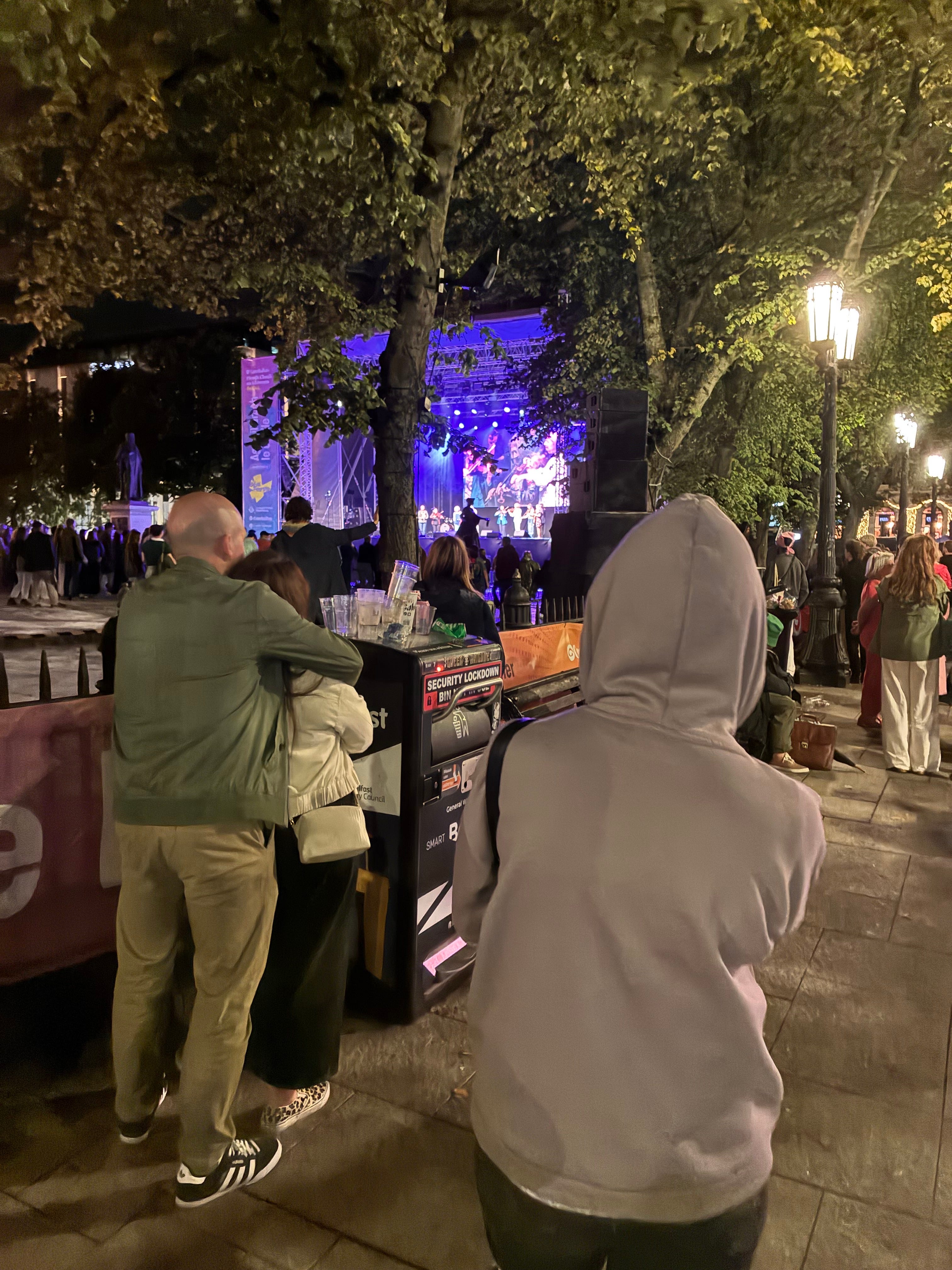
“Belfast relaxed” is such a restrained and powerful ending. After the tribes, flags, inherited wounds, famine memory, music, food, and enormous crowd, the poem does not claim that Belfast was healed or transformed forever. It simply relaxed. That modest word makes the moment feel more truthful and precious. For a little while, children occupied the corners, rival histories shared the same street, and music became something everyone could stand inside together. This is a beautiful portrait of peace arriving without a speech.
I hope you continue writing these intimate portraits of Belfast, John. You show that a city’s history does not live only in monuments or political declarations; it also lives in its corners, pavements, alleyways, sounds, and the way its people hold their bodies around one another. Here, one child’s tin whistle becomes the note that allows an entire city to exhale.
I loved this. The little girl with the pink tin whistle, the sound of the dancing, and then that last line — “Belfast relaxed.” It all felt so alive. Beautifully done.☺️💜🦋